
- DIN 2311
Standards : X153CrMoV12
| Element | % Content |
|---|---|
| Carbon (C) | 0.28 – 0.40 |
| Silicon (Si) | 0.20 – 0.80 |
| Manganese (Mn) | 0.60 – 1.00 |
| Chromium (Cr) | 1.40 – 2.00 |
| Nickel (Ni) | 0.30 – 1.00 |
| Molybdenum (Mo) | 0.30 – 0.55 |
| Sulphur (S) | ≤ 0.035 (higher in 1.2312 free-machining grade) |
Grade Brief
AISI P20 Steel is a versatile, low-alloy tool steel primarily designed for use in plastic mould tooling. It is supplied in the pre-hardened condition (around ~300 HBW / 30-32 HRC), which means it does not require further heat treatment before use, making it highly convenient for large and complex moulds.
P20 steel is a pre-hardened plastic mould tool steel with a balance of machinability, strength, toughness, and polishability. It is widely used across industries for moulds and dies, with regional equivalents like DIN 1.2311/1.2312, PX5, and 3Cr2Mo.
Key Properties
- Pre-hardened: Usually delivered at ~30–32 HRC hardness
- Good machinability: Can be machined into complex shapes
- Toughness & wear resistance: Balanced by alloying elements (Cr, Ni, Mo)
- Surface hardening possible: Can be nitride or carburized for extra hardness
- Excellent polishability: Suitable for mirror-finish moulds
- Dimensional stability: Minimal distortion during processing
Mode of Supply
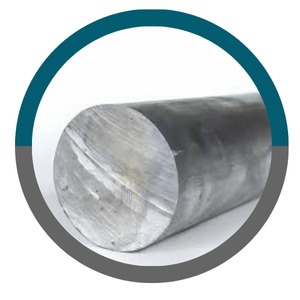
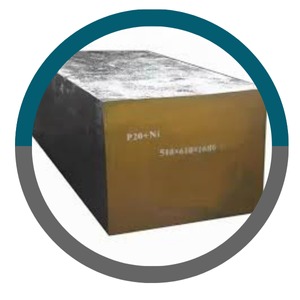
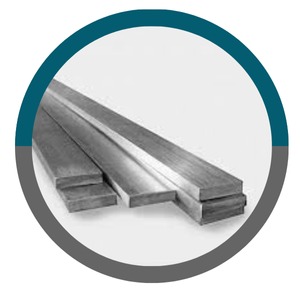
Kuber Multi Metals is the largest stockiest and supplier of P20 Steel in flat, square and round bar. We provide steel in all sizes as your requirements. P20 die steel is available in flat, square and round shape. Consult our team who will assist you for P20 steel query.
Steel Properties
P20 / DIN 2311 /AISI P20 is the Pre Hardened Plastic mould steel hardness distributed evenly in large cross sections that have excellent weldability with least hardness elevation, good mirror polishability and less streak texture making finishing easier. Size Section availability upto 255mm thickness. Supply hardness is 240-280 BHN.
| Property | Value (Approx.) |
|---|---|
| Hardness | 28 – 34 HRC (300 HBW) |
| Tensile Strength | ~1000 – 1200 MPa |
| Yield Strength | ~800 – 900 MPa |
| Impact Toughness (Charpy) | 20 – 25 J |
Physical Properties
| Temp. Range (°C) | 20–100 | 20–150 | 20–200 | 20–250 | 20–300 | 20–350 | 20–400 | 20–450 | 20–500 |
|---|---|---|---|---|---|---|---|---|---|
| Expansion Coefficient | 12.7 | 12.8 | 13.1 | 13.3 | 13.6 | 13.7 | 13.8 | 14.0 | 14.3 |
| Temperature (°C) | 23 | 150 | 300 | 350 | 400 | 500 |
|---|---|---|---|---|---|---|
| Conductivity | 32.0 | 32.8 | 31.4 | 30.2 | 29.6 | 27.5 |
Heat Treatment & Processes
Heat Treatment
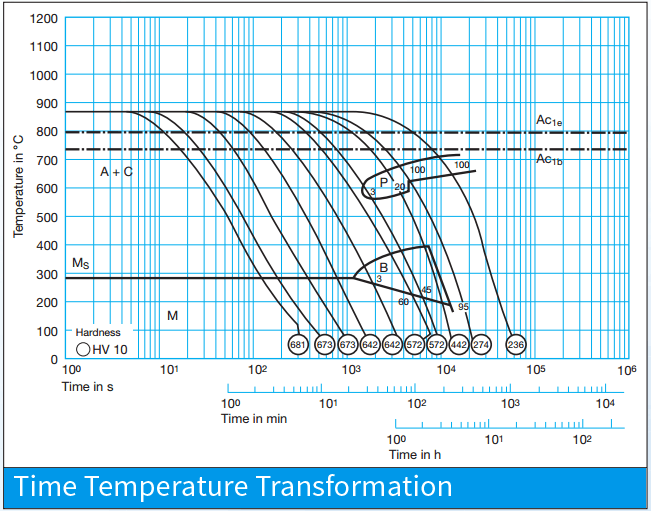
During the carburizing process, P20 / DIN 2311 / AISI P20 tool steels are heated to 871-899°C (1600-1650°F) in the carburizing medium. After carburizing, these steels are heated to 816-871°C (1500-1600°F) to harden, then held for 15 minutes before being oil quenched.
Hardening
Heat the steel consistently to 820-840°C until completely heated. Soak in oil to cool.
Forging
Heat gently, giving the steel enough time to heat all the way through. start forging at 1050 degrees. Never forge below 930°C, reheating as needed. After forging, allow it to progressively cool.
Stress Relieving
To reduce machining stresses when dies are substantially machined, stabilizing is advised right before finishing machining. 460° to 500° Celsius. Good soaking followed by air cooling is advised.
Normalizing
Heating uniformly to 900°C for P20 / DIN 2311 / AISI P20 steel.
Annealing
Heating consistently to 770–790°C for P20 / DIN 2311 / AISI P20 annealing. Good soaking, gentle cooling in the boiler.
Tempering
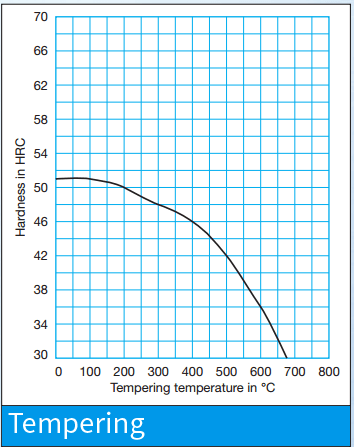
Heat evenly and soak for at least one hour for every 25mm of section at the tempering temperature. Allow it to cool in a cool air.
Welding
P20 / DIN 2311 / AISI P20 tool steels are welded using traditional techniques.
| Annealing Temp (°C) |
Cooling | Max. Hardness (HB) |
Extra Column 1 |
Extra Column 2 |
|---|---|---|---|---|
| 710 – 740 | Furnace | 235 | Value A | Value B |
| Hardening Temp (°C) |
Quenching Medium |
Hardness After Quenching (HRC) |
Extra Column 1 |
Extra Column 2 |
|---|---|---|---|---|
| 840 – 870 | Polymer or Oil | 51 | Value C | Value D |
| Tempering Temp (°C) |
100 | 200 | 300 | 400 | 500 | 600 | 700 | Extra Column 1 |
Extra Column 2 |
|---|---|---|---|---|---|---|---|---|---|
| Hardness (HRC) | 51.5 | 50.2 | 48 | 46.2 | 43 | 39 | 29 | Value E | Value F |
International Designations
| Region | Standard / Grade |
|---|---|
| USA | AISI P20 |
| Europe | DIN 1.2311, 1.2312 (ISO 4957) |
| Japan | JIS PX5 |
| China | 3Cr2Mo, 3Cr2MoNi (GB/T 1299) |
Application
Plastic injection moulds (for automotive parts, appliance housings, packaging), Die casting dies (for zinc, sometimes aluminium), Blow moulds (for bottles, containers), Mould bases, frames, and tooling components.
Conclusion
P20 (DIN 1.2311) steel is an extremely versatile, pre-hardened plastic mould tool steel that is easily machinable, strong, tough, and can produce an excellent surface finish. Its balancing characteristics render it the best in large and complex moulds, blow moulds, die casting dies, and quality mould bases. It is among the most popular steels used in mould-making globally, together with international equivalents like AISI P20, DIN 1.2311/1.2312/PX5, and 3Cr2Mo. It is also capable of being nitrided or carburized, which increases its wear resistance, and P20 is a strong contender in the long-term tooling solutions.
Addition to other Grades
HCHCR-D2 Steel , HCHCR-D3 Steel , P20+Ni Steel , P20 Steel , P20 HH , Stavax ESR , DB6 Steel , H13 Steel, H11 Steel, H21 Steel, H10 Steel, H12 Steel, M2 Steel, M35 Steel, M42 Steel, T1 Steel, C 45, MS Steel, En 31, En 24 , En 353 , En 19 , En 8 , En 8D , En 9 , En 47 , 20 Mncrs , SAE8620 , DIN 2379 Steel, DIN 2080 Steel, DIN 2738 Steel, DIN 2311 Steel, DIN 2714 Steel, DIN 2344 Steel , DIN 2343 Steel, DIN 2581 Steel, DIN 2365 Steel, DIN 2606 Steel, DIN 3343 Steel, DIN 3243 Steel, DIN 3247 Steel, DIN 3355 Steel , AISI D2 Steel, AISI D3 Steel, AISI P20+Ni Steel, AISI P20 Steel, AISI L6 Steel, AISI H13 Steel, AISI H11 Steel, AISI H21 Steel, AISI H10 Steel, AISI H12 Steel, AISI M2 Steel , AISI M35 Steel, AISI M42 Steel , AISI T1 Steel
