
Constant Quality
We use and make materials that are internationally standard.
Custom Sizes
can be of block, plate and pre-machined forms.
Precision Machining
Flatness and homogeneous hardness ensured.
We at Kuber Metals deals in the supply of high-quality P20 tool steel; the most reliable type of metal used in plastic moulds, die-casting and precision steel work. Manufacturers prefer P20 plastic mould steel due to its combination of good hardness, toughness and machinability hence a better balance between the requirements of durability, clean surface and cost efficiency in production.
AISI 1.2311 is another name that is used to refer to P20 tool steel and is a hardened alloy steel that is used in the production of plastic moulds and dies. It is usually of at a hardness range of 28-32 HRC and does not require additional hardening to be machined. Therefore, it is a convenient and time-saving solution for toolmakers and mould manufacturers.
The composition of the steel contains nickel, chromium and molybdenum which makes the steel very strong, highly polishable and evenly hardened all through large areas. Plastic mould P20 is an ideal material due to its characteristics for use in roughing and finishing of moulds in the mould-making market.
Kuber Metals is an Indian based company that supplies P20 plastic mould steels and it is reputable with the most preferred customers who are mould makers, tool makers and industrial engineers. We understand the value of the material in life and the efficiency of the means and this is the reason why we offer the certified and tested P20 steel of ultimate quality.
We use and make materials that are internationally standard.
can be of block, plate and pre-machined forms.
Flatness and homogeneous hardness ensured.
Professional advice of choice, machining and heat treatment.
Timely delivery within India and overseas markets.
You may require P20 tool steel to insert a complex mould, a massive mould base, and Kuber Metals would guarantee accuracy, performance and reliability in anything supplied.
The engineered plastic moulds steels (P20) are also designed to work reliably in these challenging sectors assisting our clients in minimizing downtime, enhancing part quality, and obtaining increased mould life.
| Element | Composition (%) |
|---|---|
| Carbon (C) | 0.28 – 0.40 |
| Manganese (Mn) | 0.60 – 1.00 |
| Chromium (Cr) | 1.40 – 2.00 |
| Molybdenum (Mo) | 0.30 – 0.55 |
| Nickel (Ni) | 0.70 – 1.00 |
| Silicon (Si) | 0.20 – 0.80 |
| Phosphorus (P) | 0.03 max |
| Sulphur (S) | 0.03 max |
Note: Composition may vary slightly based on manufacturing source and standard.
P20 tool steel is a mixture of mechanical and physical properties making it suitable for heavy-duty plastic moulds and steel work:
P20 steel finds extensive applications in industries because it has the combination of durability, machinability and cost-effectiveness. It is used in common practice in:
Since the P20 plastic mould steels are capable of producing high-quality surface finishes, they are especially used in those industries that require high precision and appearance; automotive interiors, electronic housings, consumer goods, packaging, and medical equipment.
| Property | Value |
|---|---|
| Hardness | 28–32 HRC (pre-hardened) |
| Density | 7.85 g/cm³ |
| Tensile Strength | Approx. 965 MPa |
| Yield Strength | Approx. 830 MPa |
| Modulus of Elasticity | 205 GPa |
| Thermal Conductivity | 29 W/m·K |
| Working Temperature | Up to 250°C |
These properties make P20 steel capable of withstanding the pressures and temperatures involved in plastic injection and blow moulding processes while maintaining excellent wear resistance.
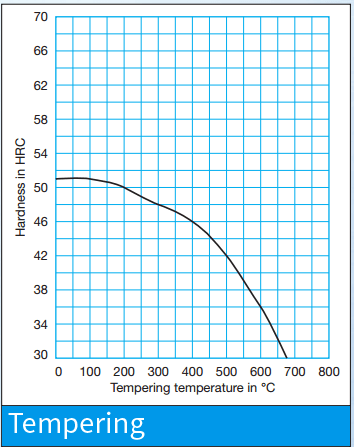
Despite being offered in pre-hardened form, P20 tool steel can be heat-treated or even nitrided to increase wear resistance and surface hardness.
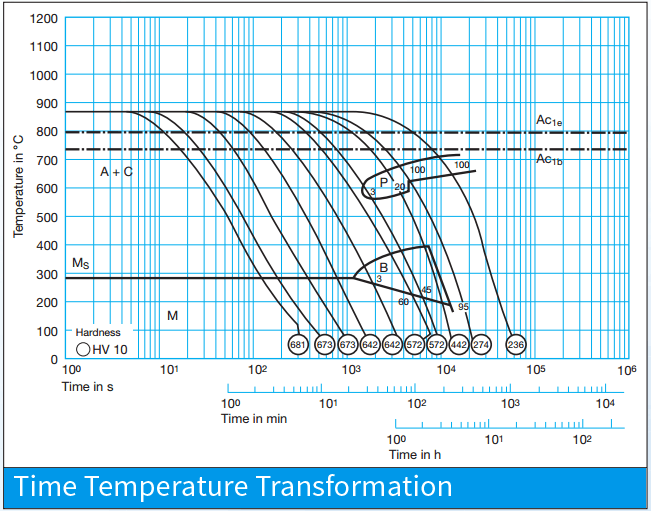
P20 may be annealed at approximately 840°C, then cooled slowly.
A hard, wear-resistant surface layer (55-60 HRC) is produced without compromising core toughness.
Enhances corrosion resistance and increases the life of moulds.
These resin treatments render the P20 plastic moulds as high wear items, particularly by manufacturing abrasive or glass-filled plastic components.
The main benefit of P20 tool steel is its high machinability. Using traditional machining tools, it can be easily milled, drilled or turned. Since it is hardened, machining distortion will be reduced and thus correct mould geometry will be achieved.
The fine-grain structure of the steel allows the material to be polished well making it the best material when it comes to optical lenses, clear plastic housings and high gloss moulds. Mould life and part surface quality can also be increased by proper polishing and cooling design.
P20 steel is weldable using the normal welding methods in case minor repairs or design changes are required. It is suggested that to re-establish surface integrity, post-weld stress relieving or polishing should be done. The mould should be kept clean, polished and nitrided where required and thus maintained regularly in order to maintain the consistency in performance and long service life of the mould.
The P20 tool steel price depends on several technical and market-driven factors. Understanding these can help buyers plan procurement more effectively.
Important factors include:
At Kubermetals, we ensure competitive P20 tool steel price while maintaining strict quality standards.
P20 plastic mould steel is superior to other common mould steels such as the H13 , EN SERIES etc , in ease of machining and cost efficiency. Although H13 has greater heat resistance, it is more challenging to machine and complete hardening is required.
P20, on the other hand, gives an optimal compromise:
It is this balance that causes P20 to become an excellent option in medium to large plastic moulds where performance and economy are important.
Every order has a story, and one from Kerala truly reflects what Kuber Metals stands for.
A tooling manufacturer from Kerala reached out to us with an urgent requirement for P20 tool steel, needed for a critical plastic mould project. The challenge was clear — precise quality, exact sizing, and a tight delivery window.
Understanding the pressure behind the request, our team acted immediately. From confirming stock availability to processing the required quantity of P20 plastic mould steel, everything was handled with care and speed. Our ready inventory and experienced operations team ensured that the material was cut, inspected, and dispatched without delay.
When the shipment reached Kerala on time, the customer shared not just relief, but genuine appreciation. The steel performed flawlessly in their moulding application, helping them meet their production deadline with confidence.
At Kuber Metals, we don’t just supply steel, we support ambitions, timelines, and trust, one order at a time.
P20 tool steel has been among the most flexible and reliable options to use in making plastic moulds and die-castings. It also outdoes its performance in precision steel work through its pre-hardened strength, superb polishing and excellent machinability.
We are proud of being your choice of high-quality P20 plastic mould steels at Kuber Metals, which have been chosen because of their high quality, durability, and consistency in every project.
Today, we can provide the most competitive prices, technical support, and bespoke supply solutions of P20 tool steel and other mould-grade products.
P20 tool steel is primarily applied in plastic injection moulds, blow moulds, and die-casting dies. It is pre-hardened, strong and can be polished, which is why it is the best choice when medium or large moulds have to be very durable and perform well.
P20 tool steel has a good toughness, machinability and surface finish. It is pre-hardened and therefore it minimizes the time and cost of machining and offers stable performance, long life of the moulds, and smooth finishes on plastic parts.
P20 tool steel is normally sold as a pre-hardened material with a hardness of between 28 and 32 HRC. This hardness facilitates easy machining although adequate strength and wear resistance are obtained in their application as plastic mould.
Yes, the surface hardening of P20 tool steel may be carried out either by nitriding or hard chrome plating. These processes enhance the hardness of the surface, wear-resistance and mould life and do not impact the core toughness and machinability of the steel.
Yes, P20 tool steel is machinable and its grain structure is fine and easily cut, drilled and milled. It also finishes attractive thus being applicable in high gloss plastic moulds and precision tooling components.
Kuber Metals is the supplier of high-quality P20 tool steel and a reliable supplier that provides certified material, bespoke sizes, and reliable delivery of plastic moulds, dies, and other applications of steel work in the entire of India.

Kuber Multi Metals LLP is a trusted supplier of high-quality alloy and industrial metals, delivering excellence across India and globally.
© 2025 Kuber Multi Metals LLP. All Rights Reserved.
WhatsApp us